

Infinite Pixel Worlds: 2D Topdown Game with Procedural Generation
Build an infinite 2D topdown game in pure JavaScript using Wave Function Collapse for terrain, finite state machines for entity behavior, and chunk-based procedural world generation.
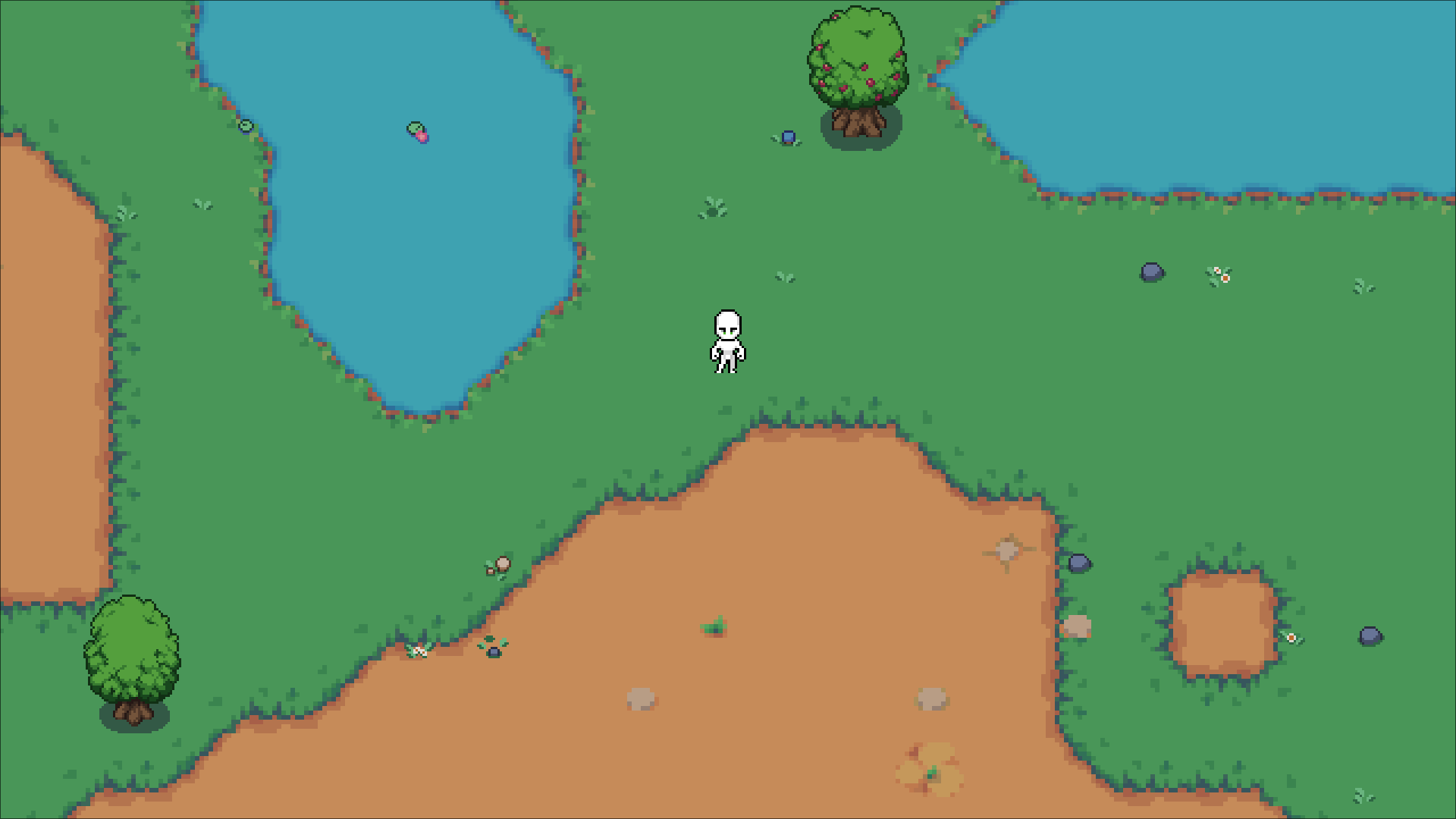
Infinite Pixel Worlds
In the ever-evolving world of game development, creating vast, procedurally generated worlds can be a daunting task. Yet, with clever algorithms and a pure JavaScript approach, it's possible to craft immersive 2D topdown experiences that feel alive and expansive. This blog post explores a 2D topdown game implementation built entirely in JavaScript, featuring advanced techniques like Wave Function Collapse (WFC) for terrain unification, finite state machines (FSM) for entity behavior, and robust procedural generation.
The Foundation: Pure JavaScript and HTML5 Canvas
At the core of this project is a no-frills, pure JavaScript implementation. No external game engines or libraries are needed—just vanilla JS running on HTML5 Canvas. The game initializes via a simple main.js entry point that sets up the canvas, loads assets asynchronously, and kicks off the main game loop.
The game uses modern ES6 modules for clean code organization, with separate classes for core systems like Game, InfiniteMap, Player, and various managers (InputManager, AssetManager). This modular structure makes the codebase maintainable and extensible.
Procedural World Generation: Infinite Maps and Chunked Loading
One of the standout features is the infinite world generation. The InfiniteMap class creates procedurally generated terrain that stretches infinitely in all directions, but only loads what the player can see through a chunk-based system.
- Chunk Management: The map is divided into
16x16tile chunks that are generated on-demand using seeded randomness. This ensures consistent world generation tied to a URL-based seed parameter. - Noise-Driven Terrain: Perlin-like noise algorithms generate natural-looking terrain variation, creating diverse biomes from grass plains to water bodies.
Wave Function Collapse: Unified Terrain Autotiling
The most sophisticated technique in this game is the Wave Function Collapse algorithm, which solves complex tile placement problems with remarkable elegance. Unlike traditional autotiling systems that handle one tile type at a time, this implementation uses a unified WFC approach that works across multiple terrain types (grass, dirt, water) simultaneously.
How it works:
- Terrain Map Generation: First, noise generates a base terrain map with values representing water (2), grass (1), or dirt (0).
- Tile Candidate Lists: Each cell starts with a superposition (set of possible tiles) based on its terrain type.
- Constraint Propagation: The algorithm systematically collapses tiles from lowest-entropy cells (fewest possibilities), propagating constraints to neighboring cells.
- Compatibility Rules: Pre-computed compatibility maps ensure tiles only connect to congruent neighbors, creating seamless terrains.
The result? Gorgeous, natural-seeming terrains with complex edge cases handled automatically—no manual tile placement required!
Finite State Machines: Intelligent Entity Behavior
Entities in the game, from the player character to roaming NPCs, each use finite state machines for behavior management. The StateMachine class provides a generic framework that transitions between states like "idle", "walk", "combat", and "interact".
For example:
- Player FSM: Handles input-driven states (movement, combat actions, interactions) with smooth sprite transitions.
- NPC FSM: Implements AI behaviors like wandering, chasing targets, or fleeing when health runs low.
This approach keeps code clean and maintainable, making it easy to add new behaviors or modify existing ones.
Combat and Interaction Systems
The game features dynamic combat with melee/ranged weapons:
- Projectile Pool: Efficiently manages reusable projectiles to avoid garbage collection issues.
- Weapon Presets: Configurable weapon stats and behaviors.
- Health/Components: Entities have modular health systems with damage, healing, and death states.
NPCs spawn procedurally around the player, with varying skins and behaviors, creating a living world.
Technical Highlights
- Y-Sorting: Entities and props render with proper depth layering based on Y-position.
- Collision Detection: Precise hitboxes for tiles, props, and entities prevent clipping issues.
- URL-Based Seeds: Shareable world seeds for consistent map generation.
- Asset Management: Sprites are loaded as-needed and cached efficiently.
- Debug Features: Built-in debugging overlays for collision detection, chunk boundaries, and tile codes.
Challenges and Solutions
Developing this system wasn't without hurdles. WFC requires careful handling of compatibility rules to avoid terrain generation failures. The chunk-based infinite map demanded optimizations to prevent lag during exploration. Finite state machines needed careful design to avoid complex, brittle conditional logic.
Yet, the payoff is immense: a scalable, performant game that generates thousands of unique worlds from a single seed.
Future Enhancements
With the foundation in place, future development could include:
- More biome types and terrain features
- Advanced entity behaviors (flocking, pathfinding)
- Multiplayer support
- WebGL rendering for enhanced visuals
This pure JavaScript 2D topdown game demonstrates that complex procedural techniques can run efficiently in the browser. By leveraging algorithms like Wave Function Collapse, developers can create vast, living worlds without exhaustive manual content creation.
The complete source code is available in the repository at /2d-topdown, showcasing how advanced game dev concepts can be implemented in plain JavaScript.